

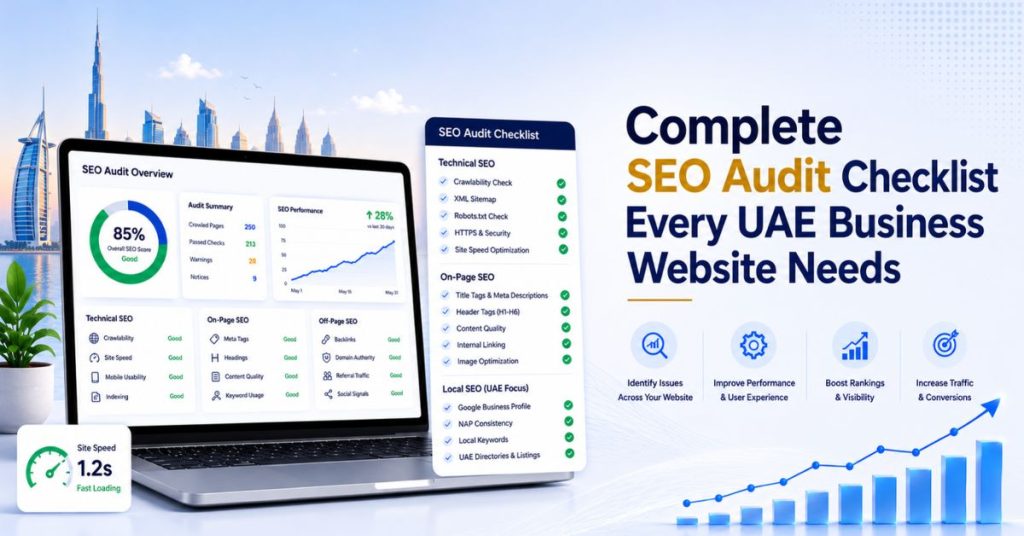
Dubai and Abu Dhabi rank among the most competitive digital markets in the Middle East, and a website that hasn’t been thoroughly checked in a year or two is quietly losing ground to competitors who have. Most business owners assume their site is fine simply because it loads and looks decent on a phone. An SEO audit Dubai businesses actually rely on goes much deeper than that, looking at everything from crawl errors to backlink quality to how fast pages load on a patchy mobile connection in Sharjah traffic. If you haven’t run one recently, or ever, here’s what a thorough audit should actually cover and why each part matters more than it might seem. Many businesses get this kind of review done through an established SEO firm in Dubai rather than guessing at what’s wrong, simply because the diagnostic work takes real tools and time.
Why an Audit Comes Before Any SEO Strategy
You can’t fix what you haven’t measured. Throwing keywords at a site or building backlinks without first understanding what’s broken usually wastes budget on problems that were never the actual issue. A proper audit tells you whether your traffic is dropping because Google can’t crawl half your pages, because your content doesn’t match what people are actually searching for, or because a competitor simply has stronger backlinks. Without that diagnosis, every fix afterward is a guess.
The Technical Foundation: Where Most Sites Quietly Fail
This is the part that gets skipped most often, mainly because it’s invisible to anyone just browsing the site. A technical SEO audit that Dubai businesses should run covers the structural stuff that search engines actually care about:
- Crawlability and indexing. Check your robots.txt file and XML sitemap, then confirm in Google Search Console that the pages you want ranked are actually indexed, not silently excluded.
- Site speed matters enormously here. A page that takes more than three seconds to load on mobile loses a meaningful share of visitors before it even finishes rendering, and Google factors that into rankings too.
- Mobile responsiveness. With most UAE traffic coming from phones, a site that renders awkwardly on smaller screens is actively costing you rankings and conversions.
- Broken links and redirect chains build up over time, especially after a redesign, and each one wastes crawl budget that could be spent on pages that actually matter.
- Schema markup. Tag your products, reviews, and business listings with structured data so Google knows what it’s looking at. Get this right and you’ll often see those star ratings or extra details show up directly in search results.
- HTTPS and security certificates need checking too. An expired SSL certificate is a quick way to scare off both visitors and search engines simultaneously.
Content and On-Page Audit
Once the technical side is sorted, the next question is whether your content is actually doing its job. A few things worth reviewing here:
- Title tags and meta descriptions across the site. These are often left as generic defaults from the original CMS template, which wastes valuable space in search results.
- Duplicate or thin content, particularly on service pages that all sound nearly identical to each other once you read them back to back.
- Keyword relevance. Whether the words on the page actually match what your target customer types into Google, rather than industry jargon nobody actually searches for.
- Internal linking structure, since pages with no internal links pointing to them are effectively invisible to both users and search engines, no matter how good the content is.
- Header tag hierarchy. A page jumping straight from an H1 to an H4 confuses both readers skimming the page and crawlers trying to understand its structure.
Backlink and Off-Page Review
Your backlink profile says a lot about how search engines view your site’s credibility, and it’s worth auditing just as carefully as anything on-page. Look at where your links are actually coming from. Links from spammy, unrelated directories tend to hurt more than they help, even in bulk. A few links from relevant, reputable UAE business sites will outweigh a hundred of those every time. Anchor text is worth a look too. If every backlink pointing to your site uses the exact same keyword phrase, search engines read that as manipulation rather than a genuine endorsement, and it can drag rankings down instead of lifting them. Competitor backlink analysis rounds this out well, since seeing where rivals are earning links often reveals opportunities you hadn’t considered.
Local SEO Checks for UAE Businesses Specifically
Local visibility matters enormously here, given how much commercial search in the Emirates happens on mobile with location turned on. Any SEO audit Dubai or Abu Dhabi business run should specifically check the following points:
- Google Business Profile accuracy, including hours, address, phone number, and category selection, since outdated listings actively hurt local rankings
- NAP consistency (name, address, phone) across directories, review sites, and social profiles
- Review volume and response rate, since both factor into local ranking signals and customer trust
- Location-specific landing pages if the business serves multiple Emirates, rather than one generic page trying to rank everywhere at once
What a Good Audit Report Should Actually Tell You
A lot of audits end up producing a long list of issues without much sense of priority, leaving a business owner with forty problems and no idea which one to fix first. A useful audit does more than flag what’s wrong. It should tell you which issues are actually costing traffic right now versus which ones are minor housekeeping, roughly how much effort each fix involves, and what kind of timeline to expect before you see movement in rankings once the fixes go live.
Severity matters as much as the count of issues found. A site with three serious technical problems and clean content usually has an easier fix ahead of it than a site with fifty small content issues spread across hundreds of pages. Asking whoever runs the audit to rank findings by impact, rather than just listing them in the order their tool happened to generate the report, makes the resulting action plan far more useful. Without that prioritization, teams often spend weeks on low-value fixes while the issue actually suppressing rankings sits untouched near the bottom of the list.
How Often Should You Actually Run This
A full audit once a year is a reasonable baseline for most small and mid-sized businesses, with a lighter technical SEO audit Dubai teams can run quarterly to catch anything that broke after a site update or plugin change. Businesses in fast-moving sectors like e-commerce or hospitality often benefit from checking more frequently, since algorithm updates and seasonal traffic shifts can expose new issues quickly. The point isn’t to audit obsessively; it’s to catch problems while they’re still cheap to fix, rather than six months after they’ve already cost you rankings.
Bringing the Audit Together
None of these individual checks mean much in isolation. A site can have flawless technical SEO and still underperform if the content doesn’t match search intent, or it can have brilliant content sitting on pages Google can’t even crawl properly. That’s really the whole point of running a thorough SEO audit Dubai businesses can act on: it connects the technical, content, and off-page pieces into one clear picture of what’s actually holding a site back. Whether you handle this in-house or bring in outside expertise, treat the audit as the starting point, not a one-off task to check off.
Businesses weighing their options often compare notes with established SEO companies in Abu Dhabi and Dubai alike before deciding who actually runs the technical SEO audit Dubai and the wider Emirates market depend on, since the right diagnosis at the start tends to save far more time and budget than any quick fix applied later.