

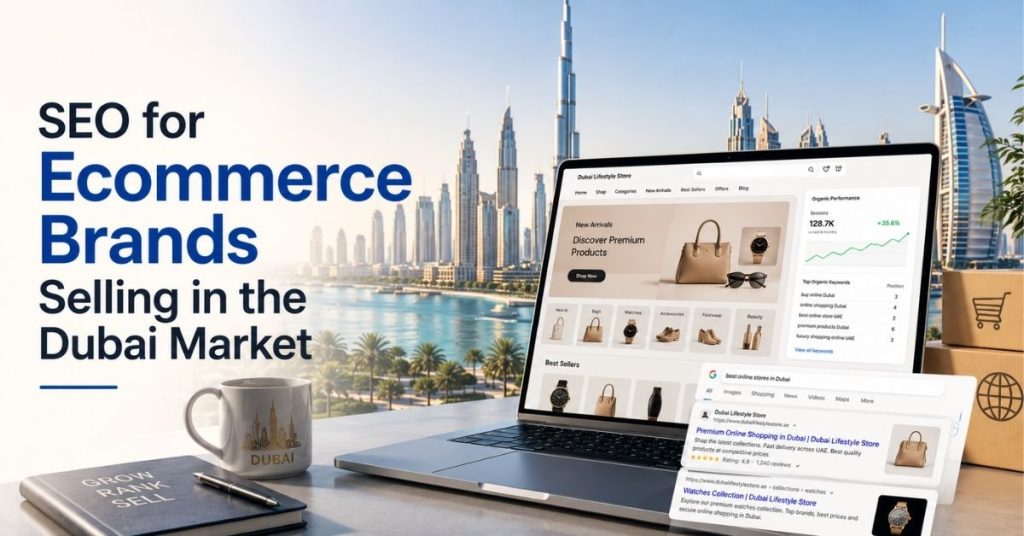
Dubai’s online shopping scene has exploded over the past few years and honestly, the competition has grown right alongside it. New stores pop up almost weekly, all chasing the attention of shoppers who already have dozens of options open in other tabs. If you run an ecommerce brand here, getting found on Google isn’t optional anymore. It’s what keeps the lights on. Partnering with the best SEO agency in Dubai can be the thing that separates a store nobody notices from one that’s constantly pulling in buyers who are ready to check out.
In this blog, we will take a closer look at how ecommerce brands can carve out real visibility in Dubai’s crowded online market.
Why Dubai Needs a Different Playbook
Selling online here doesn’t work the same way it does in London or New York and pretending otherwise usually backfires. Shoppers in the UAE are multilingual, sharp on pricing and they’ll often check three or four sites before they commit to a purchase. That behaviour shows up in how they search too. Some type in English, some in Arabic and plenty switch between both depending on what device they’re holding. An ecommerce SEO strategy that ignores this mix is already starting from a weaker position and that’s before you even factor in things like how mobile-heavy shopping habits are or how much people expect a fast, frictionless checkout.
A lot of underperforming ecommerce sites aren’t failing because of bad products. They’re failing because nobody built the strategy around how Dubai actually shops.
What a Real Ecommerce SEO Strategy Looks Like
Everything starts with figuring out what a customer types before they ever land on your site. And keyword research for this market needs to go deeper than the obvious terms. “Buy sneakers online UAE” and “sneakers Dubai same day delivery” might look similar on paper, but they come from two completely different mindsets and each one needs its own approach in terms of content and page structure.
Category pages don’t get nearly enough love. Brands will spend hours polishing individual product descriptions, then leave their category pages practically empty, which is a shame because those pages often rank for the broader searches that bring in the most traffic.
A handful of things tend to make the biggest difference for ecommerce brands operating here:
- Product titles and meta descriptions written the way UAE shoppers actually search, not the way a template suggests
- Structured data so products display pricing, stock status and reviews right there in the search results
- Smart internal linking that keeps someone browsing three more products instead of bouncing after one
None of these work well on their own, though. They need to sit inside a bigger content plan, one that actually answers the questions shoppers have, whether that’s about sizing, delivery windows, or return policies.
Optimization Doesn’t Stop at Rankings
Getting traffic is only step one. What happens after someone lands on your site is where ecommerce website optimization really earns its keep. Page speed matters more than most brands realise, especially on mobile, since that’s where a huge chunk of Dubai’s shoppers are browsing and buying from. If a product page takes four seconds to load, you’ve probably already lost the sale before the visitor even sees an “Add to Cart” button.
Technical issues quietly do a lot of damage too. Broken links, duplicate product pages, messy URL structures, these confuse search engines just as much as they confuse actual customers. Cleaning that up often moves the needle faster than piling on new content, mostly because it removes the friction that was holding rankings back in the first place.
User experience and SEO aren’t really two separate things anymore either. Google keeps rewarding sites that keep people engaged, so clean navigation, useful filters and product photos people can actually trust all end up feeding back into your rankings, even if it’s not obvious at first glance.
Local Search Still Matters, Even Online
You’d think a fully online brand wouldn’t need to worry about local SEO, but that’s not quite true in the UAE. Someone searching “electronics store near me Dubai” or “furniture delivery Sharjah” expects results tied to their location and Google tends to favour businesses that show clear local relevance through things like consistent addresses, local reviews and location-specific pages.
This becomes even more relevant for ecommerce brands that also run a showroom or pickup point somewhere. A properly optimised Google Business Profile, paired with a few location-based landing pages, can capture searches that a purely national strategy would miss completely.
Building Trust With Shoppers Who Are Still Cautious
Trust plays into every purchase decision, but it matters even more in a market where online shopping is still relatively new for certain categories. Blog content, buying guides, comparison articles, these do more than just support your keyword targets. A genuinely useful guide on “how to choose the right air conditioner for Dubai summers” tells a shopper you actually know what you’re talking about and people notice that.
Reviews carry weight too, maybe more than brands give them credit for. Encouraging real customer feedback and putting it front and centre on product pages helps conversions and it feeds into search rankings since Google factors review signals into how it ranks products across many categories.
Tracking the Numbers That Actually Matter
Rankings look nice in a report, but they don’t pay anyone’s bills. What matters more is tracking things tied directly to revenue: organic conversion rate, average order value from organic traffic and where people are abandoning carts on pages that rank well but somehow still underperform. That data tells you exactly where your ecommerce SEO strategy needs adjusting, whether it’s the product copy, the checkout flow, or the keywords you’re chasing altogether.
At Infinix 360, we’ve spent years helping ecommerce brands across Dubai turn search visibility into actual sales, not just traffic that looks good on a dashboard. This market rewards brands that understand their shoppers, respect the language mix they search in and build fast, trustworthy online experiences. We don’t believe ecommerce SEO is about chasing every algorithm update that comes along. It’s about building a website that both search engines and real customers end up trusting. So if you’re weighing your options among SEO companies in Abu Dhabi and want a team that takes your growth as seriously as you do, we’d love to help you build that strategy at Infinix 360.
Frequently Asked Questions
How long does ecommerce SEO take to show results in Dubai’s market?
Most brands start seeing real movement within three to four months, though it can take longer in saturated categories like fashion or electronics.
Does ecommerce SEO work differently for Arabic versus English product listings?
Yes, quite a bit actually. Arabic search behaviour tends to involve different phrasing and intent, so it needs its own keyword strategy rather than a straight translation of the English pages.
Should ecommerce brands prioritise mobile optimization over desktop in Dubai?
Given how mobile-first UAE shoppers are, mobile really should be the starting point for design decisions, not something added on afterward.
How important are product reviews for ecommerce SEO rankings?
More important than most brands assume. They influence click-through rates directly and act as a trust signal Google factors into how product pages rank.
Can small ecommerce brands compete with larger retailers in Dubai’s search results?
Definitely, especially by focusing on specific niches and long-tail keywords where bigger retailers often have thin, generic content.